


What Home Insurance Is and Why It Matters
Think of home insurance as a financial safety net for one of the biggest investments you’ll ever make. Your policy provides protection when disaster strikes, covering damage to your home and belongings from things like fires, theft, vandalism, and many natural disasters. A tree falls through your roof during a storm? Your policy steps in. Someone breaks in and steals your electronics? You’re covered for that too.
Here’s something many first-time buyers don’t realize: most mortgage lenders won’t give you a loan without proof of homeowners insurance. It’s not just a good idea. It’s a requirement if you’re borrowing money to buy your home. Lenders want to protect their investment just as much as you want to protect yours.
But home insurance goes beyond protecting bricks, mortar, and furniture. Every policy includes liability coverage, which shields you financially if someone gets hurt on your property and decides to sue. Imagine a delivery driver slips on your icy steps and breaks their arm. Without liability coverage, you could be paying medical bills, legal fees, and potentially a lawsuit settlement out of your own pocket. That’s where this protection becomes absolutely crucial.
Let’s talk numbers for a second.

The cost of rebuilding a home from the ground up typically runs anywhere from $100,000 to well over $500,000, depending on your home’s size, location, and construction quality. Could you write that check tomorrow if your house burned down tonight? Most people couldn’t. That’s exactly why insurance exists.
The Six Standard Coverage Types in Home Insurance Policies
Home insurance policies break down into six main coverage types.
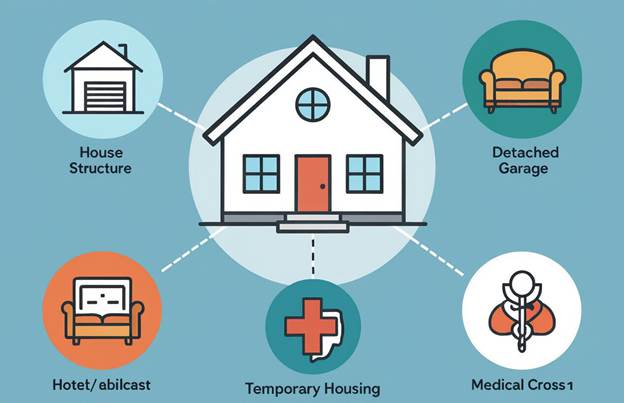
Each one protects a different part of your property and life.
Coverage A, or Dwelling Coverage, protects the actual structure of your home. This includes your walls, roof, floors, built-in appliances, and anything permanently attached to your house. If a fire damages your kitchen or a hailstorm destroys your roof, Coverage A pays for repairs or rebuilding.
Coverage B handles Other Structures on your property that aren’t attached to your main house. Your detached garage, storage shed, fence, or that cute guest house in the backyard all fall under this coverage. Insurance companies usually set this at about 10% of your dwelling coverage amount automatically. So if your home is insured for $300,000, you’d typically get $30,000 for other structures.
Coverage C is your Personal Property protection. This covers everything inside your home and other structures. Furniture, clothes, kitchen appliances, electronics, sports equipment. Even items you take with you outside your home, like your laptop or jewelry, can be covered. Most policies set this at 50 to 70% of your dwelling coverage amount.
Coverage D, Loss of Use coverage, kicks in when your home becomes unlivable because of a covered loss. Your house is being rebuilt after a fire? This coverage pays for hotel rooms, restaurant meals, and other extra costs you wouldn’t normally have. You won’t be sleeping in your car or draining your savings while contractors restore your home.
Liability and Medical Payments Coverage Explained
Coverage E provides Personal Liability protection, and this might be the most underestimated part of your policy. This coverage protects you when someone claims you’re responsible for injuring them or damaging their property. Standard policies often start at $100,000, but insurance experts typically recommend carrying at least $300,000 to $500,000. Lawsuits are expensive. Legal defense alone can cost tens of thousands of dollars.
What surprises many homeowners is that liability coverage follows you beyond your property line. Your dog bites someone at the park? Covered. You accidentally damage a friend’s expensive camera while visiting their house? That’s covered too. This protection travels with you.
Coverage F handles Medical Payments for guests injured on your property, regardless of who’s at fault. Someone trips on your front steps? This coverage pays their medical bills without a lawsuit, typically ranging from $1,000 to $5,000. Think of it as a goodwill gesture that often prevents small incidents from becoming big legal problems.
For homeowners with significant assets or higher risk factors like a swimming pool or trampoline, consider adding an umbrella policy. These policies provide an extra $1 to $5 million in liability coverage beyond your standard policy limits. They’re surprisingly affordable too, often costing just a few hundred dollars annually for a million dollars of additional protection.
HO-3 vs. Other Policy Types: Choosing the Right Form
Insurance companies offer several policy forms, and picking the right one matters more than most people think. The differences aren’t just about price. They’re about what actually gets covered when something goes wrong.
The HO-3, called a Special Form policy, is what most homeowners buy. It covers your dwelling against all risks except those specifically listed as exclusions in your policy. Your personal belongings, on the other hand, are only covered for named perils specifically listed in the policy. This hybrid approach gives you broad protection for your house structure while keeping costs reasonable.
An HO-5, or Comprehensive Form policy, offers the most extensive coverage available. Both your dwelling and personal property are covered on an open-peril basis, meaning everything is covered unless explicitly excluded. You’ll pay about 10 to 20% more than an HO-3, but you get significantly broader protection. For many homeowners with valuable possessions, that extra coverage is worth every penny.
HO-6 policies are designed specifically for condo owners. Since the condo association’s master policy typically covers the building’s exterior and common areas, your HO-6 covers your unit’s interior, personal property, and liability. You’re not paying to insure what the association already covers.
Renters need an HO-4 policy, commonly called renters insurance. This protects your personal belongings and provides liability coverage without insuring the building itself. That’s your landlord’s responsibility.
HO-8, or Modified Coverage policies, work well for older homes where replacement cost exceeds market value. These policies pay actual cash value rather than full replacement cost, making them more affordable for historic or unique properties that would be prohibitively expensive to insure at full replacement value.
Common Exclusions and Limitations Every Homeowner Should Know
Every home insurance policy has gaps. Understanding what’s not covered prevents nasty surprises when you file a claim.
Standard policies don’t cover flood damage, earthquakes, or earth movement. Live near water or in an earthquake zone? You’ll need separate policies or endorsements. Many homeowners in supposedly low-risk areas learned this lesson the hard way during recent flooding events. Flood insurance through the National Flood Insurance Program is available even if you’re not in a high-risk zone.
Your policy won’t pay for maintenance issues, normal wear and tear, mold, pest infestations, or damage you cause intentionally. Insurance covers sudden, accidental losses, not ongoing neglect or predictable deterioration. That leaky roof you’ve been meaning to fix for two years? If it causes water damage, your claim might be denied.
High-value items come with strict limits. Jewelry, artwork, collectibles, and firearms often have coverage caps of just $1,000 to $2,500 total, regardless of their actual value. Own a $10,000 engagement ring? You’ll need to schedule it separately with a personal property endorsement, paying a bit extra for full coverage.
Running a business from home creates another coverage gap. Home-based business equipment and liability are typically excluded or severely limited. If clients visit your home office, you need separate business insurance. Your homeowners policy won’t protect you from business-related claims.
A kitchen fire. A tree through the roof. A burst pipe that floods your entire first floor. Any of these things can happen to your home without warning. And without the right insurance, you could be looking at a repair bill anywhere from $100,000 to well over $500,000. That’s enough to financially wreck most families.
But here’s the thing. Even if you already have a home insurance policy, there’s a good chance you don’t fully understand what it covers. Most homeowners don’t. The policy documents are long, the terminology is confusing, and the difference between an HO-3 and an HO-5 isn’t exactly dinner table conversation. Meanwhile, premiums keep climbing, and what was adequate coverage three years ago might leave you seriously underinsured today.
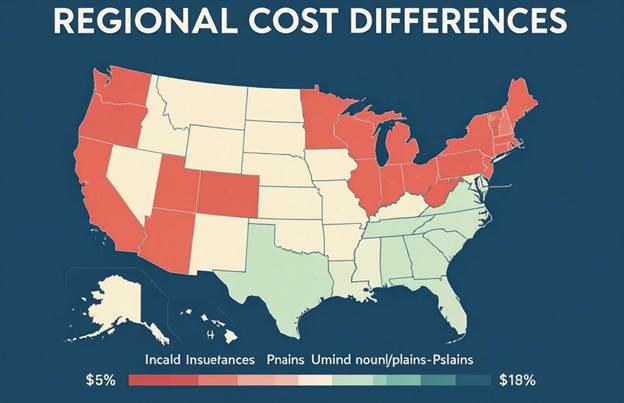
This guide breaks down everything you need to know about home insurance in the United States. You’ll learn what the six standard coverage types actually protect, what’s excluded from most policies, how much you should expect to pay based on where you live, and real ways to lower your premiums without gutting your coverage.



Leave a Reply